

Extreme heat is one of the most critical operational challenges facing temperature-controlled facilities across Saudi Arabia. With summer temperatures often exceeding 45°C, warehouses, healthcare facilities, data centers, and logistics hubs must maintain strict environmental control to protect sensitive products and equipment. Traditional monitoring methods are no longer sufficient. This is where AI-based temperature mapping study approaches are transforming how facilities manage heat risks.
At Eximia360 (www.Eximia360.com), we deliver advanced temperature mapping study solutions across Saudi Arabia, Jeddah, Dammam, and Riyadh, integrating artificial intelligence with proven validation methodologies. Below are five key ways AI-driven temperature mapping studies help facilities overcome extreme heat challenges.
1. Predictive Risk Detection Before Heat Damage Occurs
One of the greatest advantages of AI-based temperature mapping study models is predictive analytics. Instead of reacting to temperature excursions after they occur, AI algorithms analyze historical mapping data, seasonal patterns, and equipment behavior to forecast risk zones.
In Saudi environments, where heat loads fluctuate rapidly, predictive temperature mapping study insights allow facility managers to take corrective actions—such as adjusting airflow or load distribution—before temperatures exceed safe limits.
2. Intelligent Sensor Placement for High-Heat Zones
AI enhances the design of every temperature mapping study by identifying optimal sensor placement based on risk probability rather than fixed grids. Using machine learning, systems learn which zones are most vulnerable during peak heat conditions, such as near loading docks, ceilings, or sun-exposed walls.
This ensures that temperature mapping study data accurately reflects real-world heat behavior, especially in facilities across Riyadh and Dammam, where external heat penetration is intense.
3. Real-Time Pattern Recognition and Alerts
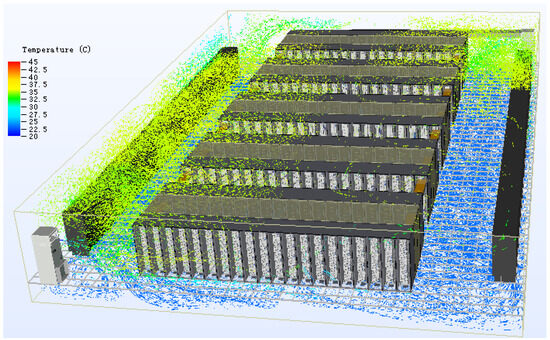
AI-enabled temperature mapping study platforms can recognize abnormal temperature trends in real time. Instead of relying on static threshold alarms, AI evaluates temperature behavior patterns, detecting subtle shifts that may indicate HVAC degradation or airflow blockage.
For facilities in Jeddah’s humid coastal climate, this real-time intelligence is crucial in preventing compounded risks caused by both heat and moisture.
4. Adaptive HVAC Optimization During Peak Heat
Extreme heat puts enormous strain on HVAC systems. AI-based temperature mapping study data helps facilities dynamically optimize cooling performance by identifying over-cooled and under-cooled zones.
By linking mapping insights with building systems, facilities can balance cooling demand, reduce energy waste, and maintain uniform temperatures—even during Saudi summer peaks. This makes the temperature mapping study not only a compliance tool but also an energy-efficiency driver.
5. Smarter Compliance and Audit Readiness
Regulatory compliance in Saudi Arabia increasingly requires documented evidence of controlled environments. AI improves temperature mapping study reporting by automating data analysis, deviation detection, and trend summaries.
Facilities benefit from audit-ready documentation that clearly demonstrates risk management under extreme heat conditions. This is especially valuable for regulated sectors operating in Saudi Arabia, Jeddah, Dammam, and Riyadh.
Why AI-Driven Temperature Mapping Matters in Saudi Arabia
Saudi Arabia’s climate demands proactive environmental control strategies. AI transforms the temperature mapping study from a snapshot validation exercise into a continuous, intelligent monitoring system. This shift enables facilities to anticipate problems, protect assets, and maintain compliance even under extreme thermal stress.
Eximia360: AI-Powered Temperature Mapping Expertise
At Eximia360 (www.Eximia360.com), we combine AI technology with industry-proven temperature mapping study methodologies to deliver reliable results in challenging climates. Our services support facilities across Saudi Arabia, Jeddah, Dammam, and Riyadh, offering:
- AI-enhanced temperature mapping study planning
- Predictive heat-risk analysis
- Smart sensor deployment
- Seasonal and peak-summer validation
- Audit-ready compliance reporting
Conclusion
As extreme heat becomes the defining operational challenge in Saudi Arabia, AI-based temperature mapping study solutions provide a powerful advantage. By predicting risks, optimizing cooling, and strengthening compliance, AI enables facilities to operate safely and efficiently—even in the harshest conditions. With Eximia360, organizations gain a future-ready partner for intelligent temperature mapping across the Kingdom.