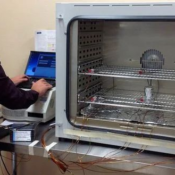
Riyadh’s extreme climate places significant pressure on temperature-controlled facilities, especially warehouses, healthcare environments, data centers, and logistics hubs. With outdoor temperatures frequently exceeding safe limits, maintaining internal temperature stability is critical for product safety, equipment protection, and regulatory compliance. This is where an AI-driven temperature mapping study plays a vital role by identifying hidden thermal risks that traditional monitoring may overlook.
At Eximia360 (www.Eximia360.com), we conduct advanced temperature mapping study services across Saudi Arabia, Jeddah, Dammam, and Riyadh, using artificial intelligence to analyze temperature behavior with greater accuracy. Below are seven critical temperature zones commonly identified by AI during temperature mapping studies in Riyadh facilities.
1. Loading and Unloading Dock Areas
AI-based temperature mapping study results consistently show loading docks as high-risk zones. Frequent door openings, vehicle heat, and exposure to outdoor temperatures cause rapid fluctuations. AI analysis highlights how short exposure times can still create lasting temperature instability inside storage zones.
2. Upper Racking and Ceiling Zones
Heat naturally rises, making upper rack levels and ceiling areas critical focus points in any temperature mapping study. AI tools analyze vertical temperature gradients and often reveal that upper zones exceed acceptable limits, even when floor-level temperatures appear compliant.
3. Areas Near External Walls and Sun-Exposed Surfaces
AI-enhanced temperature mapping study data identifies external walls—especially those exposed to direct sunlight—as major heat intrusion points. In Riyadh facilities, these zones frequently experience delayed cooling recovery, posing risks to temperature-sensitive products stored nearby.
4. HVAC Air Supply and Return Zones
While HVAC systems are designed to stabilize temperatures, AI-driven temperature mapping study insights show that air supply and return locations can create uneven airflow patterns. Some zones may be over-cooled while others remain under-cooled, leading to temperature imbalance across the facility.
5. Doorways and Transition Areas Between Rooms
AI identifies doorways and interconnecting corridors as critical zones during a temperature mapping study. These transition areas often act as thermal bridges, allowing warm air infiltration that affects adjacent storage rooms, especially during peak operational hours.
6. Corners and Low-Airflow Zones
Corners and areas with restricted airflow are frequently flagged during AI-assisted temperature mapping study analysis. These zones may trap heat or cold, causing localized deviations that are difficult to detect without intelligent pattern recognition.
7. Equipment-Dense Zones Generating Internal Heat
AI-based temperature mapping study platforms are highly effective at identifying heat generated internally by machinery, lighting, servers, or electrical panels. In Riyadh facilities, these internal heat sources often compound external climate stress, creating hidden risk zones.
Why AI Enhances Temperature Mapping Accuracy
Traditional temperature mapping study methods rely on static data points and fixed acceptance limits. AI introduces dynamic analysis by learning how temperature behaves over time, identifying trends, correlations, and risk escalation patterns. This is especially valuable in Riyadh, where environmental conditions change rapidly.
By detecting these seven critical zones, facilities can apply targeted corrective actions such as airflow redesign, insulation improvements, sensor repositioning, or HVAC optimization.
Eximia360: AI-Powered Temperature Mapping Expertise
At Eximia360 (www.Eximia360.com), we integrate AI technologies into every temperature mapping study to deliver accurate, audit-ready results. Our services across Saudi Arabia, Jeddah, Dammam, and Riyadh include:
- AI-enhanced temperature mapping study planning
- Risk-based sensor placement
- Seasonal and worst-case condition analysis
- Actionable data interpretation
- Compliance-focused reporting
Conclusion
In Riyadh’s extreme climate, hidden temperature risks can compromise product quality, operational efficiency, and compliance. An AI-driven temperature mapping study reveals critical temperature zones that traditional approaches often miss. By identifying and addressing these seven high-risk areas, facilities can strengthen environmental control and long-term resilience. With Eximia360, organizations gain a trusted partner for intelligent temperature mapping across Saudi Arabia.