
As regulatory expectations and operational risks continue to rise across Saudi Arabia, temperature-controlled facilities are under increasing pressure to demonstrate tighter environmental control. From pharmaceuticals and healthcare to food storage and logistics, the role of the temperature mapping study has evolved from a compliance requirement into a strategic performance tool. Today, new developments in technology, data analysis, and regulatory alignment are reshaping facility standards across the Kingdom.
At Eximia360 (www.Eximia360.com), we deliver advanced temperature mapping study services across Saudi Arabia, Jeddah, Dammam, and Riyadh, helping facilities stay aligned with emerging best practices. Below are nine key developments influencing modern temperature mapping standards in Saudi facilities.
1. Shift from One-Time Validation to Continuous Mapping
One major development is the transition from one-time validation toward periodic and continuous temperature mapping study cycles. Regulators and auditors increasingly expect facilities to demonstrate ongoing environmental control rather than relying on historical data.
2. Risk-Based Temperature Mapping Study Design
Modern temperature mapping study approaches now prioritize risk-based planning. Instead of uniform sensor placement, studies focus on high-risk zones such as loading bays, doorways, ceiling levels, and external walls—areas commonly affected by Saudi Arabia’s extreme climate.
3. Integration of Wireless Sensor Technologies
Wireless data loggers are transforming how a temperature mapping study is conducted. These devices improve accuracy, reduce human error, and allow flexible placement in complex environments, particularly in large warehouses and distribution centers.
4. Higher Expectations for Seasonal and Worst-Case Analysis
Facility standards now demand that every temperature mapping study accounts for seasonal variation. In regions like Riyadh and Dammam, summer mapping under peak ambient temperatures has become a critical requirement to prove system robustness.
5. Advanced Data Analytics and Visualization
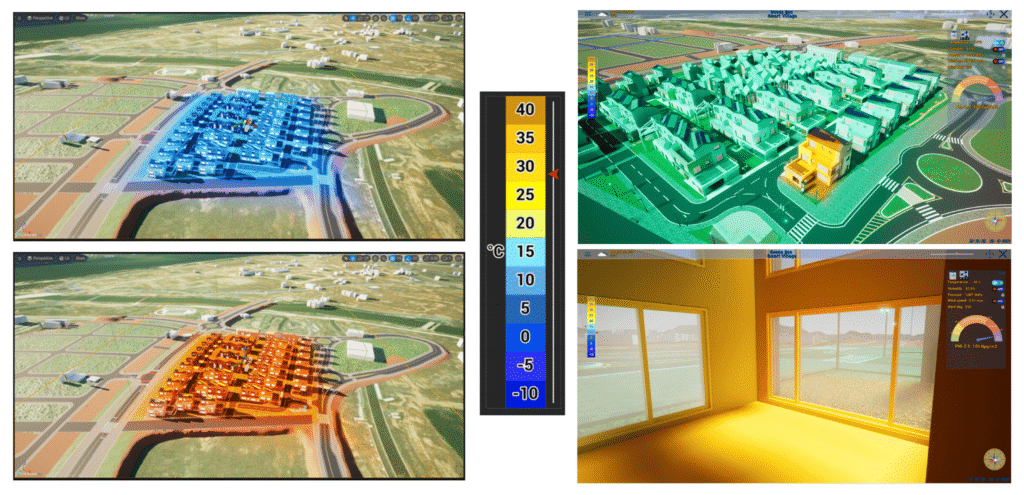
Another emerging development is the use of advanced analytics in temperature mapping study reporting. Heat maps, trend analysis, and deviation forecasting help facility managers understand temperature behavior beyond simple pass/fail results.
6. Stronger Alignment with SFDA and International Guidelines
Saudi facility standards are increasingly aligned with SFDA, WHO, and global GMP expectations. A compliant temperature mapping study now requires clearer documentation, traceable calibration, and defined acceptance criteria to meet audit scrutiny.
7. Mapping Beyond Storage: Transport and Transition Zones
Temperature mapping is no longer limited to static rooms. Today’s temperature mapping study often includes loading docks, staging areas, and transport vehicles—critical transition points where temperature excursions frequently occur.
8. Energy Efficiency and Sustainability Considerations
Facilities are now using temperature mapping study data to optimize HVAC performance and reduce energy waste. By identifying over-cooled or unstable zones, organizations can lower operational costs while supporting Saudi sustainability initiatives.
9. Digital Reporting and Audit-Ready Documentation
Digital documentation has become a new standard. Modern temperature mapping study reports are structured for rapid audit review, featuring electronic records, traceable data, and clear corrective action documentation—significantly simplifying inspections.
Why These Developments Matter for Saudi Facilities
Saudi Arabia’s climate, combined with growing regulatory oversight, makes temperature control a critical operational priority. These emerging developments ensure that a temperature mapping study is no longer reactive, but proactive—supporting compliance, efficiency, and product integrity.
Facilities that adopt these advancements are better prepared for audits, experience fewer temperature deviations, and gain greater operational confidence.
Eximia360: Supporting Advanced Temperature Mapping Standards
At Eximia360 (www.Eximia360.com), we apply the latest temperature mapping study developments to real-world Saudi environments. Our services support facilities across Saudi Arabia, Jeddah, Dammam, and Riyadh, delivering:
- Risk-based temperature mapping study planning
- Seasonal and worst-case condition analysis
- Wireless sensor deployment
- Audit-ready documentation
- Regulatory-aligned reporting
Conclusion
As facility standards continue to evolve across Saudi Arabia, staying current with emerging temperature mapping study developments is no longer optional—it is essential. By adopting modern methodologies and working with experienced providers like Eximia360, organizations can ensure compliance, operational excellence, and long-term resilience in a challenging climate.