
As warehousing operations across the world continue to evolve, so does the technology behind environmental monitoring. Modern warehouses—especially those handling pharmaceuticals, food, chemicals, and temperature-sensitive materials—require advanced tools to ensure consistent and accurate climate control. In Saudi Arabia, where environmental conditions can vary dramatically between Jeddah, Dammam, and Riyadh, the need for precision becomes even more critical. This is where the future of warehouse validation lies: in wireless and cloud-based sensors integrated into advanced temperature mapping study processes.
Eximia360, a leader in temperature mapping study, brings these innovative solutions to facilities across Saudi Arabia, Jeddah, Dammam, and Riyadh, helping businesses take full advantage of modern wireless monitoring technologies.
Website: www.Eximia360.com
Why Wireless Sensors Are Transforming Temperature Mapping
Traditional data loggers used in temperature mapping studies require manual placement, manual downloading, and physical retrieval after the study is complete. While effective, these methods are time-consuming and prone to human error. Wireless sensors eliminate these challenges by enabling real-time temperature and humidity monitoring throughout the entire facility.
Wireless technology enhances the temperature mapping study process through:
- Instant data access without retrieval
- Remote monitoring from any device
- Reduced manpower and faster validation
- Greater accuracy and fewer data gaps
- Improved compliance with global standards
As warehouses in Saudi Arabia grow larger and more complex, wireless systems provide the flexibility and control needed for precise environmental validation.
How Cloud-Based Sensors Improve Data Accuracy and Reporting
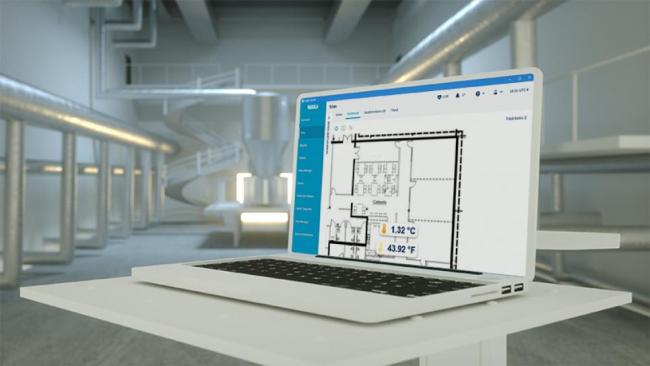
Cloud-based sensor systems allow temperature data to be recorded, stored, and analyzed in real-time, transforming the way temperature mapping study results are generated. Instead of waiting until the study is complete, teams can observe live temperature behavior, detect deviations instantly, and take corrective action.
Cloud-based systems support warehouse validation by:
1. Real-Time Data Integrity
Data is uploaded automatically to a secure cloud platform, preventing data loss due to device malfunction or mishandling.
2. Automated Reporting
Instead of manually compiling information, cloud software generates compliant reports instantly—meeting GDP, WHO, and SFDA expectations.
3. Greater Visibility
Warehouse managers can monitor multiple zones, cold rooms, or chambers in different cities simultaneously—ideal for operations running in Jeddah, Dammam, and Riyadh.
4. Faster Corrective Action
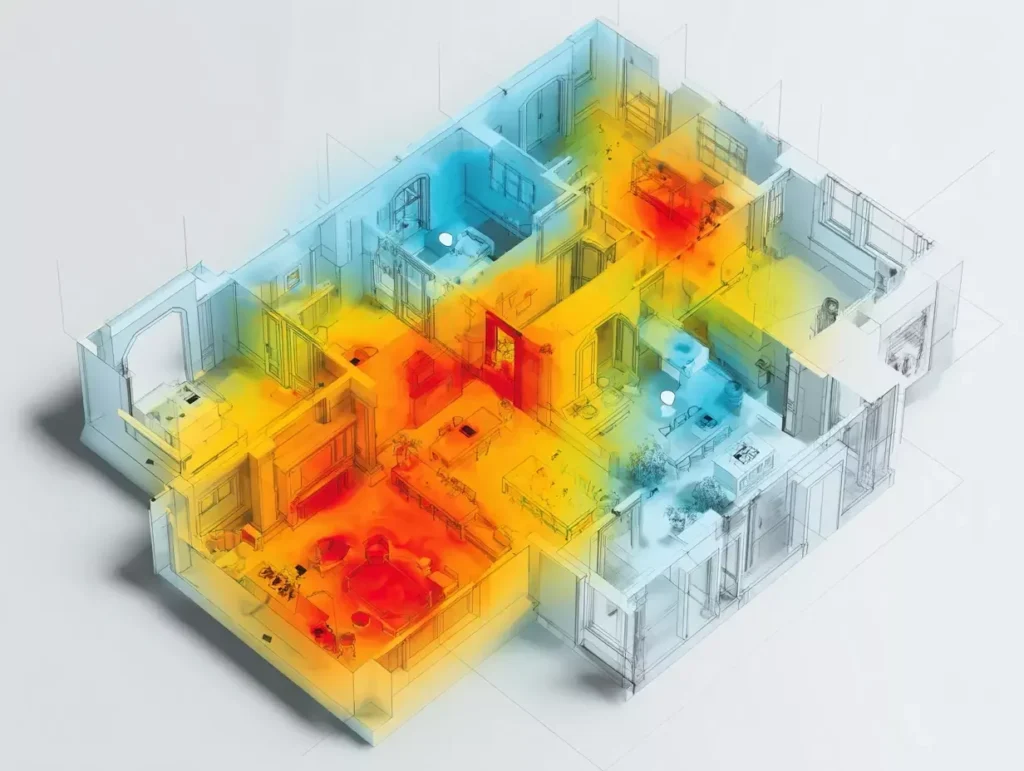
If the temperature mapping study detects a hotspot or cold zone, alerts are sent immediately to technicians to quickly resolve issues.
5. Long-Term Trend Analysis
Cloud storage allows for comparison between mapping cycles, helping organizations improve energy efficiency and operational planning.
Improving Sensor Placement with Wireless Technology
One of the most important elements of any temperature mapping study is sensor placement. Wireless sensors offer unparalleled flexibility because they can be installed in locations where wired devices are difficult to position.
Wireless systems allow:
- Easy placement at high, low, and obstructed points
- Faster setup and shorter validation timelines
- More detailed temperature profiles of large storage areas
- No interference with shelving, forklifts, or daily operations
This makes wireless systems especially effective for large warehouses in Saudi Arabia, where temperature variations may occur due to external heat, airflow imbalances, or structural design.
The Future of Warehouse Validation in Saudi Arabia
Saudi businesses are steadily moving toward smart warehousing solutions. As part of this transition, temperature mapping study is becoming more dependent on wireless and cloud-connected technologies. These tools offer deeper insights, more accurate validation, and improved efficiency—allowing companies to meet regulatory expectations with ease.
As the logistics, pharmaceutical, and food sectors expand in Jeddah, Dammam, and Riyadh, wireless sensors will play a central role in ensuring storage conditions remain safe, compliant, and verifiable at all times.
Eximia360 — Leading the New Era of Temperature Mapping
With advanced technologies, expert engineers, and a commitment to precision, Eximia360 provides cutting-edge temperature mapping study services across Saudi Arabia, Jeddah, Dammam, and Riyadh. Using wireless and cloud-based systems, the company ensures that warehouse validation becomes faster, more accurate, and future-ready.
Learn more at:
www.Eximia360.com